

يعرب الاتحاد الأسترالي للمجالس الإسلامية برئاسة الدكتور راتب جنيد عن بالغ قلقه إزاء قرار الحكومة الفيدرالية تقديم قوانين جديدة تتعلق بخطاب الكراهية عبر عملية مشاورات محدودة للغاية مدتها ٧٢ ساعة فقط، لا سيما مع اقتراب استئناف أعمال البرلمان خلال أسابيع قليلة.
إن هذا النهج يقوض مبادئ المشاركة الديمقراطية، ويضع ضغوطًا كبيرة على منظمات المجتمع المدني، وخصوصًا تلك التي تعمل بموارد محدودة أو على أساس تطوعي، والتي قد لا تكون قادرة على مراجعة أو الرد على تشريعات بهذه الأهمية في الوقت المتاح.
يقوم الاتحاد حاليًا بمراجعة القوانين المقترحة، ومع ذلك تشير تقييماتنا الأولية إلى عدة علامات تحذير، منها:
إدخال عقوبات جنائية دون وضوح كافٍ أو ضوابط حماية، ما يثير خطر التجاوز أو التنفيذ الانتقائي.
استهداف بعض المجتمعات بشكل واضح في الخطاب العام المحيط بالتشريع، دون مشاورات أو مشاركة مناسبة مع تلك المجتمعات نفسها.
الفشل في تضمين الدين كخاصية محمية بموجب أحكام التحريض، على الرغم من التوثيق المتزايد لتهديد الإسلاموفوبيا.
توسيع الصلاحيات المقترحة للوزراء لإلغاء التأشيرات أو تقييد الدخول لأسباب تتعلق بـ”الكراهية” دون اتباع الإجراءات القانونية الواجبة أو معايير شفافة.
غياب أي دليل واضح يشير إلى أن الأحكام القانونية الحالية غير كافية، وغياب أي تفسير علني يوضح سبب عدم إمكانية تنفيذ القوانين القائمة بفعالية أكبر.
نظرًا لخطورة الإصلاحات المقترحة وتأثيرها الواسع المحتمل على المجتمع المسلم وغيره، يدعو الاتحاد الحكومة لتأجيل عرض هذا التشريع إلى حين إجراء عملية مشاورات شاملة ومناسبة.
ونحن نتساءل كذلك عمّن، إن وجد، قامت الحكومة بمشاورتهم من داخل المجتمع المسلم قبل صياغة هذه المقترحات. فإذا كان الهدف الحقيقي من التشريع هو مواجهة الكراهية بجميع أشكالها، فيجب أن يكون المجتمع الأكثر تأثرًا جزءًا من الطاولة، ليس كأمر ثانوي، بل كشريك حقيقي في صياغة الاستجابة.
يظل الاتحاد ملتزمًا بالعمل بشكل بناء مع الحكومة لتعزيز التماسك الاجتماعي وحماية جميع المجتمعات من التحريض على العنف أو الكراهية، إلا أن تحقيق هذه الأهداف لا يمكن أن يتم من خلال قوانين متسرعة أو مشاورات انتقائية.
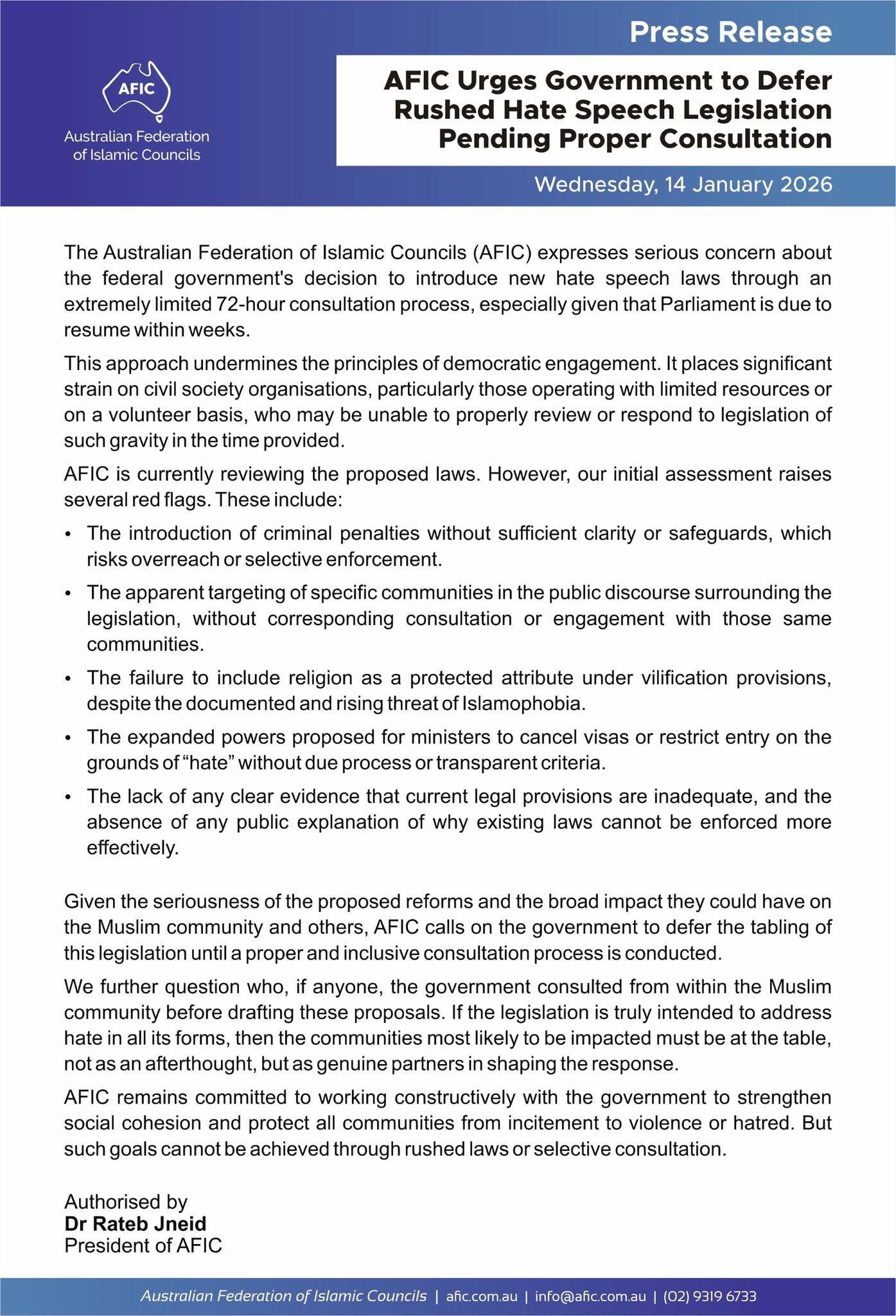
AFIC Urges Government to Defer Rushed Hate Speech Legislation Pending Proper Consultation
The Australian Federation of Islamic Councils (AFIC) expresses serious concern about the federal government’s decision to introduce new hate speech laws through an extremely limited 72-hour consultation process, especially given that Parliament is due to resume within weeks.
This approach undermines the principles of democratic engagement. It places significant strain on civil society organisations, particularly those operating with limited resources or on a volunteer basis, who may be unable to properly review or respond to legislation of such gravity in the time provided.
AFIC is currently reviewing the proposed laws. However, our initial assessment raises several red flags. These include:
• The introduction of criminal penalties without sufficient clarity or safeguards, which risks overreach or selective enforcement.
• The apparent targeting of specific communities in the public discourse surrounding the legislation, without corresponding consultation or engagement with those same communities.
• The failure to include religion as a protected attribute under vilification provisions, despite the documented and rising threat of Islamophobia.
• The expanded powers proposed for ministers to cancel visas or restrict entry on the grounds of “hate” without due process or transparent criteria.
• The lack of any clear evidence that current legal provisions are inadequate, and the absence of any public explanation of why existing laws cannot be enforced more effectively.
Given the seriousness of the proposed reforms and the broad impact they could have on the Muslim community and others, AFIC calls on the government to defer the tabling of this legislation until a proper and inclusive consultation process is conducted.
We further question who, if anyone, the government consulted from within the Muslim community before drafting these proposals. If the legislation is truly intended to address hate in all its forms, then the communities most likely to be impacted must be at the table, not as an afterthought, but as genuine partners in shaping the response.
AFIC remains committed to working constructively with the government to strengthen social cohesion and protect all communities from incitement to violence or hatred. But such goals cannot be achieved through rushed laws or selective consultation.
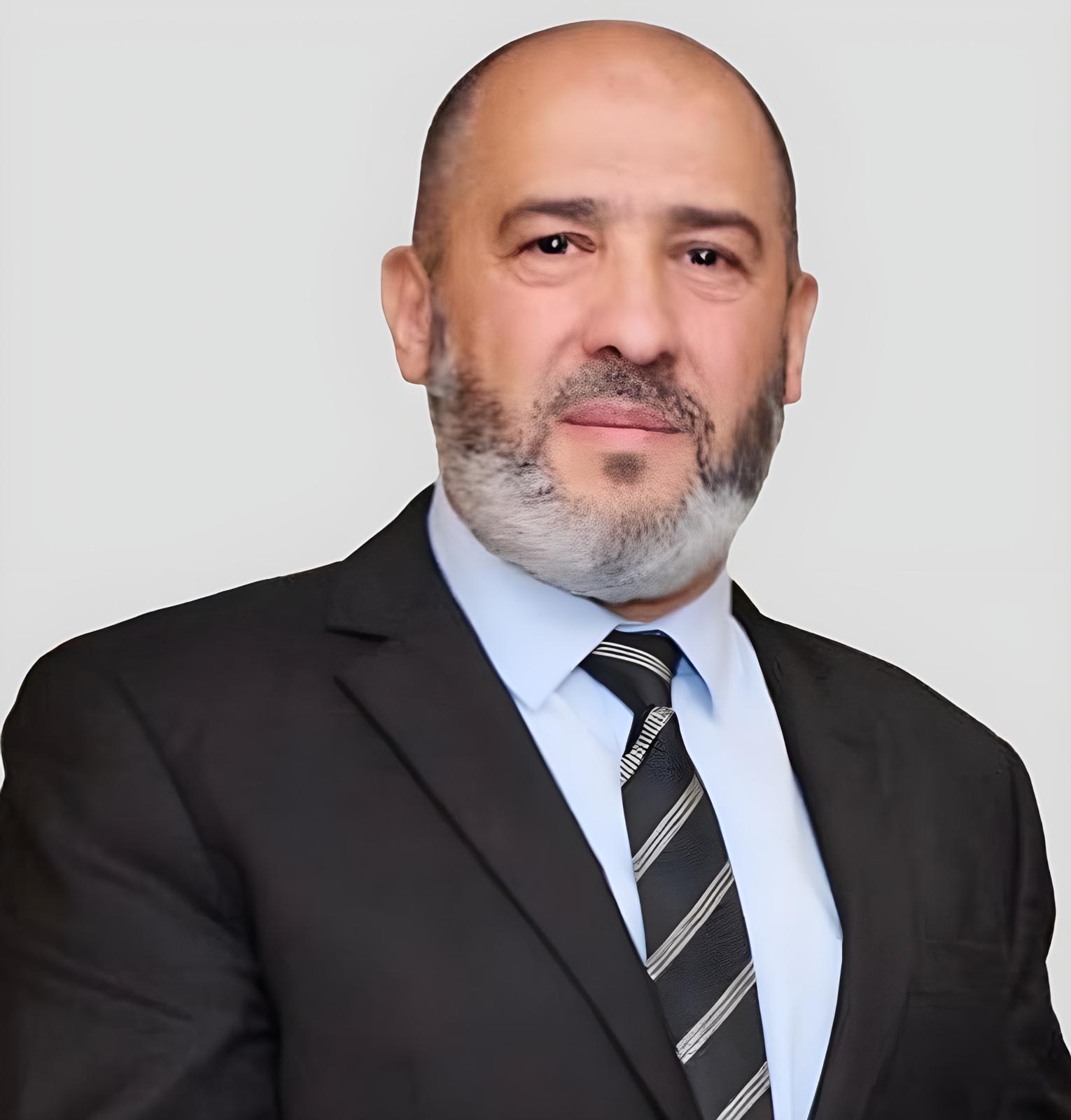
Dr Rateb Jneid
President – Australian Federation of Islamic Councils